
Last week I watched last year’s Toxic Town series on Netflix, and then the Horizon documentary from 2020 (available on DailyMotion).
For anyone unfamiliar with it, Toxic Town tells the story of families in Corby, Northamptonshire, who were exposed to toxic dust during the reclamation of the Corby steelworks in the 1980s and 1990s. Nineteen families had children born with limb differences or other serious health problems - at least one resulting in the death of a newborn baby.
Over time, those families gathered enough evidence to prove that Corby Council had been negligent, and that the birth defects were caused by exposure to toxic waste released into the air during the clean-up. Their case became one of the most significant environmental justice rulings in UK history.
There are many obvious - and unsettling - parallels with Southall Gasworks.
 ---
---
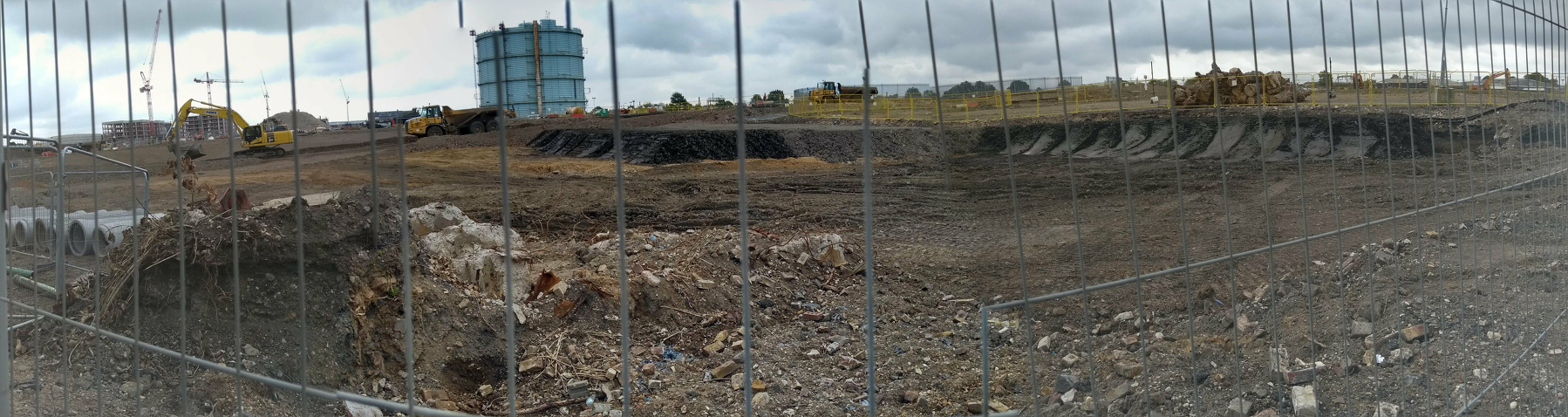
For ten years we have been exposed to toxic waste exposed to the air as dust and odours. I’m not aware of any children being born with birth defects, but I know there were lots of reports of health problems including:
- eye, nose and throat irritation
- nausea and vomiting
- chest infections and breathing difficulties
- heart problems
- cancer
- ectopic pregnancy
- non-epileptic seizures
- sudden death of previously healthy pets
I know that some people reported worsening of asthma and other health conditions.
These are all consistent with exposure to benzene, naphthalene and other volatile organic compounds known to be buried at the gasworks site.
Despite resistance from Berkeley Group and Ealing Labour Council, we eventually managed to get the air quality data.
The problem was that it arrived as thousands of pages of scanned PDFs, making meaningful analysis almost impossible.
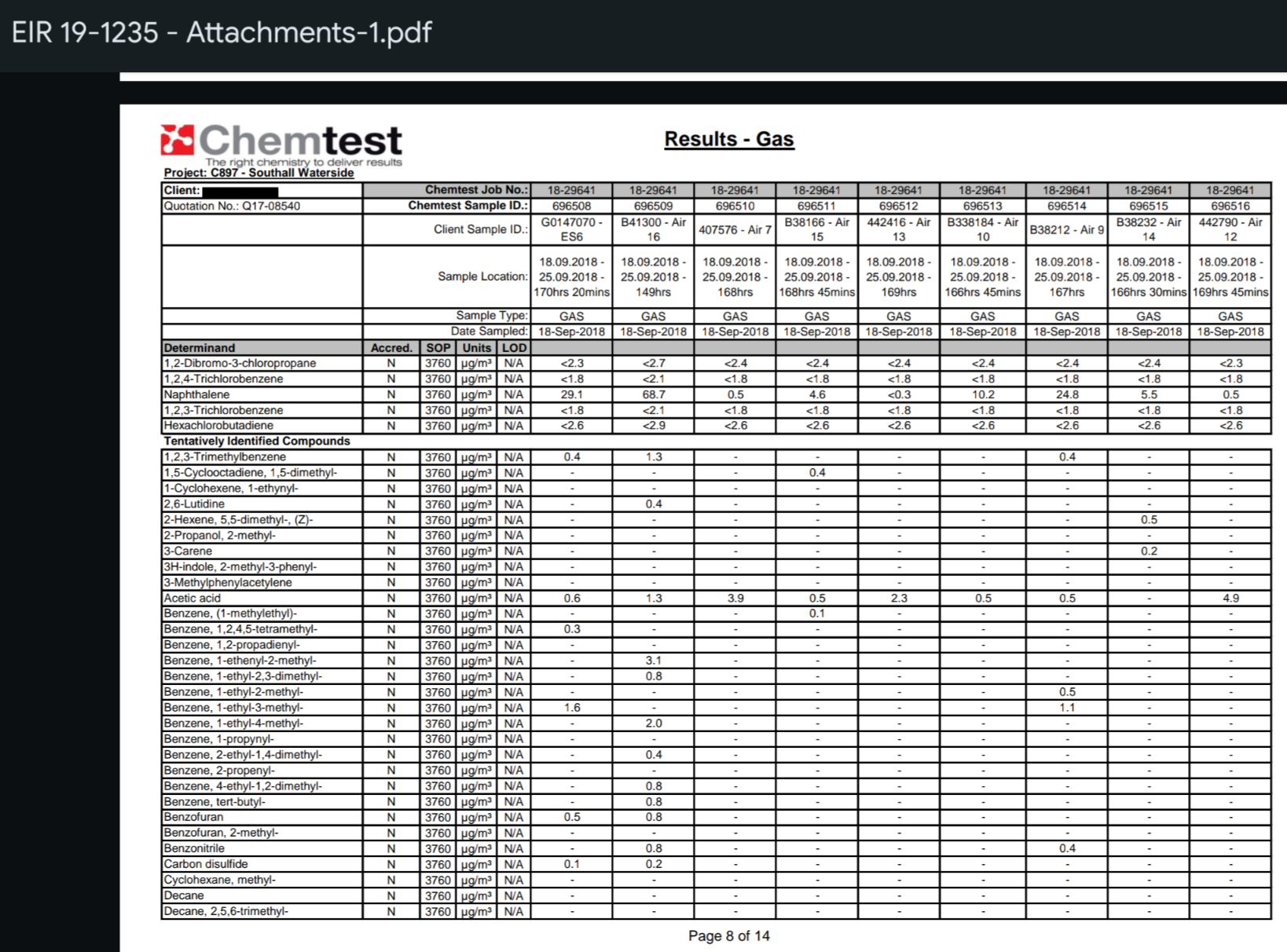
Last year, I tried using AI to process the material. Even then, it couldn’t reliably read it.
Recently, I tried again using a different technique - and this time it worked.
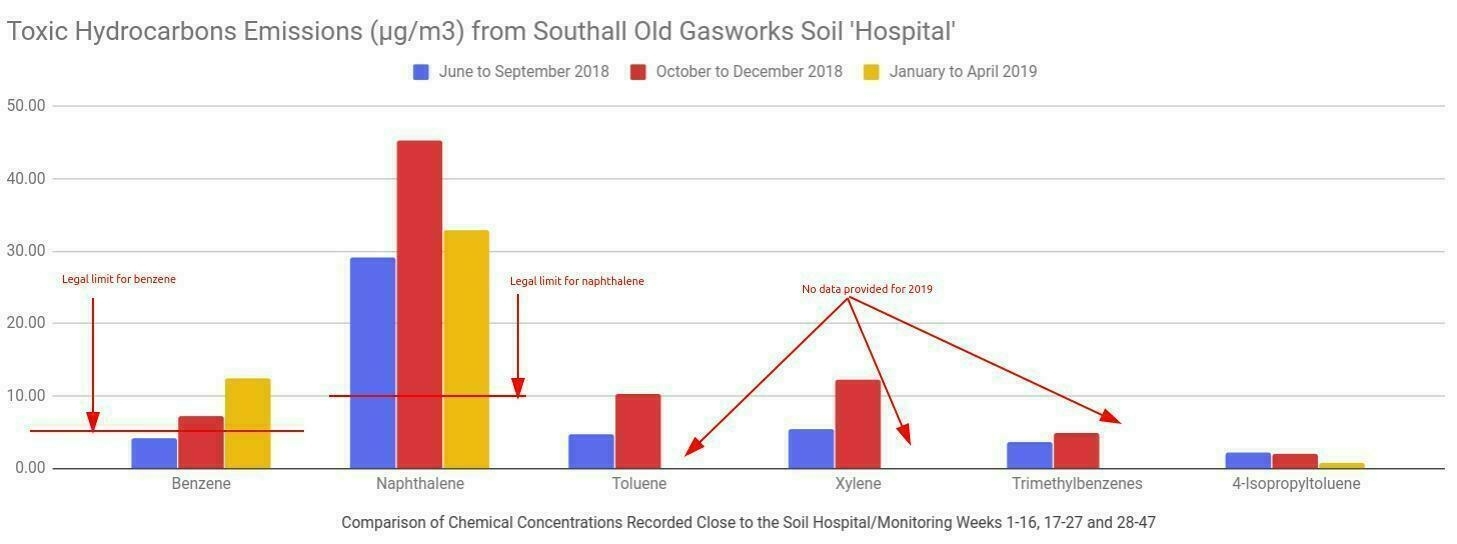
What’s emerging is striking: high levels of benzene and naphthalene closely match the dates and times when people reported odours and health effects, both publicly (on social media) and privately (by email or message). I kept all the records.
I’m now working through around 1,300 pages of data, alongside every report of odours or illness I can trace, to match them up fully. In truth, many of us always suspected or knew in our hearts - and lungs - this connection - but for years we were told by authorities that:
- it was all in our heads
- the air was safe and the odours harmless to health despite levels being over legal limits.
I’m writing this now for two reasons.
First, to reconnect with some of you I lost touch with over the past five years - life happened, including a second child arriving right at the start of the pandemic.
Second, to ask how things are now.
- Has anything changed?
- Is it still happening?
- How’s your health?
For me personally, I was diagnosed with chronic lung disease last year. I honestly don’t know whether it’s related - but I can’t help wondering. I sincerely hope it’s just me, and that everyone else is healthy and well.
Either way, I’d really like to hear from you - whether you’ve been quiet for years, or are reading this for the first time. This isn’t about blame or legal action, although that could change. At this stage, it’s simply about gathering all the available evidence and people’s stories, for the record.
You can respond:
- in the comments below
- by email: david@davidmarsden.info
- via WhatsApp: https://wa.me/qr/4MUTFBX64DCIB1
If you’d rather not revisit this period, I completely understand.
All private conversations are confidential unless you explicitly consent to attribution.