I grew up in rural Lincolnshire and moved down South permanently in 1999. Ever since, I’ve been trekking back up to the East Midlands and the North Sea coast to visit family and enjoy holidays from my childhood with my own kids at Butlins and caravan parks.
On one such trip many years ago, we visited Lincoln and its famous and beautiful cathedral, and its imposing castle.
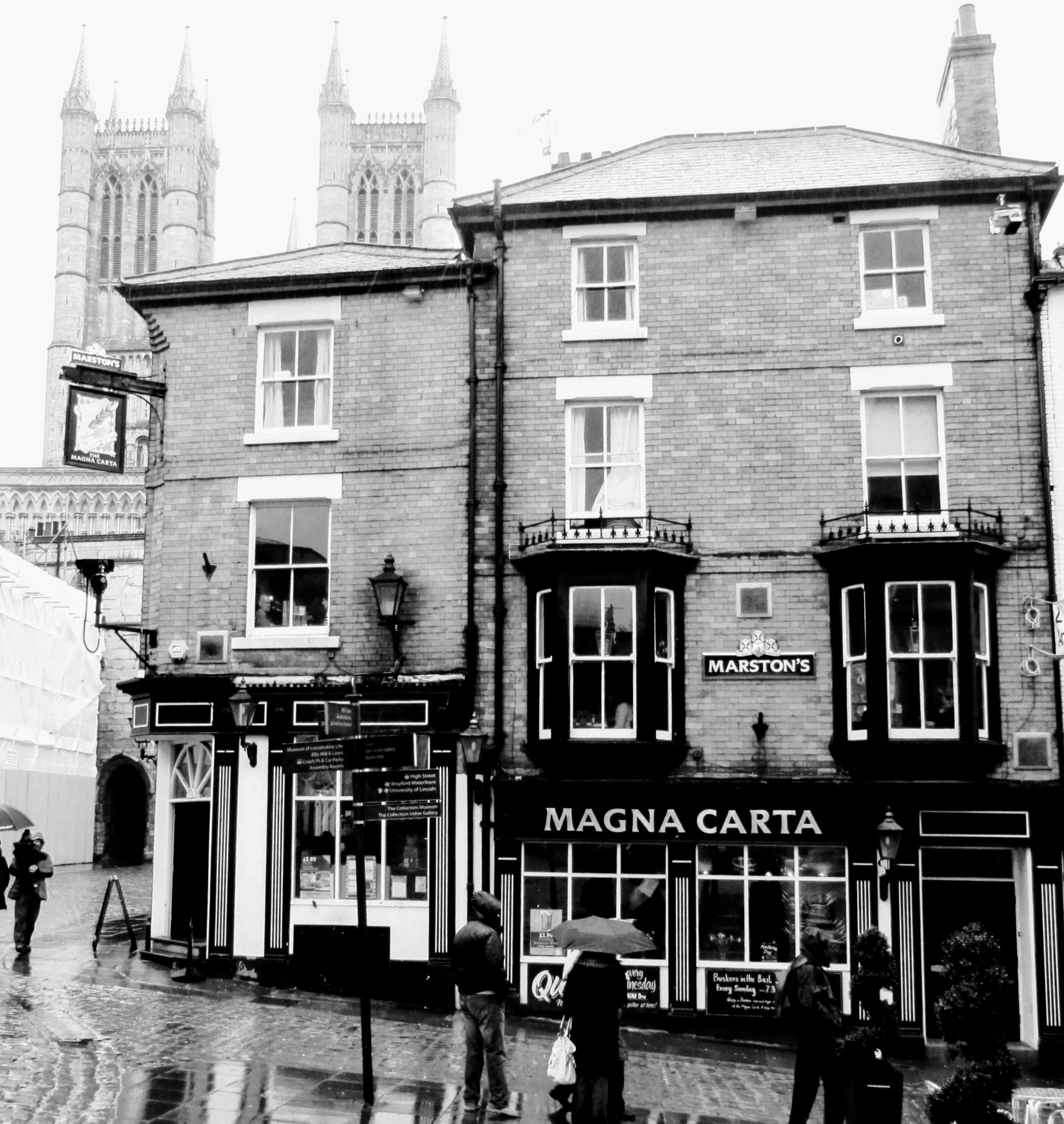
Inside the castle there’s an archive room containing items of historical interest, one of which is one of the last remaining copies of an 800-year-old legal document. The Charter of the Forest remained on the statute book in part until the remaining provisions were repealed by the Wild Creatures and Forest Laws Act 1971.
Most people have heard of its big brother, Magna Carta, a copy of which also resides in the same room. The lesser-known Charter of the Forest caught my eye. While Magna Carta was concerned largely with the legal relationship between the monarch and the nobility, the Charter of the Forest seemed more relevant to the ordinary person.
It was concerned with protecting the rights of free men to use land and resources subject to royal forest law: to graze animals, gather resources and maintain customary rights needed for everyday life. Royal forest did not simply mean woodland fenced off for the King’s hunting. It was a legal jurisdiction imposed over land. The Charter restricted that jurisdiction, required some land to be disafforested and restored or protected customary rights over resources people depended upon.
Of course, most ordinary people in those medieval days were not free men at all. They were peasants and serfs and had no rights at all. Still, it was a step in the right direction!
What’s the point of all this? And thanks for sticking with me if you’re still here!
I wasn’t much into History at school — it was all about learning by rote the Kings and Queens of England and how various Royal Families interbred and murdered each other. That’s all highly revered in the Houses of Parliament still. As I’ve got older, like many, I have developed more of an interest in history, albeit later than might have been helpful to me personally. Nevertheless, it’s never too late to learn and try to avoid repeating the same mistakes.
The Charter of the Forest may be an 800-year-old law, but it raises a question that is still recognisable: > who gets to control access to resources that people rely upon?
That gives us a useful framework for thinking about public and private ownership — not just of land and resources for living, but also of knowledge, information and the means of accessing it and sharing it.
But what’s all this got to do with Southall and Ealing?
When I started taking an interest in local governance, it was to ask what was happening to the part of Southall I call home — what was the smell of petrol enveloping our home and streets? Could anyone else smell it? And if it was petrol, was it dangerous to health? What I had hoped would be a simple customer service issue turned out to be slightly more complicated.
It’s been surprisingly hard to get or find reliable and authoritative answers to those three questions, if at all. No one has ever really answered the first question straightforwardly. The answer to the second question, I was told — along with many others, I subsequently found out — was, no, I was the only one and I must be too sensitive. The answer to the third question was a resounding no from all the authorities, in spite of all the evidence from people’s testimonies to the contrary.
The verdict is still very much up in the air, and quite likely in our lungs, and our blood, and in the cells and tissues of our vital organs. An enclosure, in this instance, would have been welcome!
Questions inevitably lead to more questions.
What happened to the air-quality data? The complaints? The petition? The homes? The money? The bridge? The hotel? The cinema? The health centre? The school? Local democracy?
Why was it so difficult to get answers? Why was it so difficult to find out what happened?
Many of the answers to these questions are hidden in plain sight. But only if you know where to look. And sometimes, the evidence simply disappears.
Southall Stories came into existence to try to address some of those problems, and to put the record straight. But it is just one version of history, and it is still a fragmented history at that.
The resident-led Community Powered Reporting brought much of it together, along with many other official sources, in the powerful What Happened to Southall? report in March 2026. It was a tremendous effort gathering all the evidence and putting it all together into one coherent whole.
Wouldn’t it be useful if there was a way to make the digging less of a chore, and to make connecting the dots to see the bigger picture easier?
I don’t know about you, but I gather my information and stories from a wide range of sources, some more useful than others. When I was younger, I used to love looking through my grandparents’ set of encyclopedias, and when I was a student, the university library was like a second home. The internet has brought unimaginable quantities and qualities of information to our fingertips, but what started out in the universities as a means for knowledge exchange and sharing soon became monetised and siloed. Almost all of our news and social connection online now lives within the confines of one proprietary app or platform or another, owned by a billionaire.
There are still some renegades on the World Wide Web, and there are still some of the original foundations of the information-exchange mechanisms that aren’t owned by anyone and are free to use.
Anyone who uses social media will be familiar with the feeling of seeing their friends and family disappear from their timelines to be replaced by whatever it is the algorithm has decided it wants you to click on and respond to.
But there is another way.
Back in 1999, as I was moving to London and everyone was preparing for a new millennium, a mechanism for sharing information openly and freely on the internet was developed called RSS — Really Simple Syndication. The history of RSS reaches back to Netscape in 1999, and the RSS 2.0 specification remains an open way for websites to syndicate what they publish.
A website publishes stories in a feed or timeline. Readers subscribe to it.
That’s it.
No walled garden, no paywall, no algorithm boosting some stories over others. You subscribe to the websites you enjoy reading and you receive their newly published articles.
One of the pioneers of RSS, Dave Winer, has recently been experimenting again with ways to socialise feeds — allowing people to share information and comment using the same open mechanisms. People have been sharing and commenting online for years, of course. That’s not new.
What is interesting is the potential to bring together lots of different sources of information into one place with all their individual RSS feeds, and then build a social layer on top.
For Southall Stories, and Ealing, that means bringing together sources related to local democracy and governance, health, environment, housing, social care, jobs, the economy and more into one place on the internet, while also facilitating contributions from residents — submitting sources, articles, evidence and comments.
What began as a weekend project rather quickly snowballed into a grand idea of a Civic Commons.
A place on the internet where anyone can go to gather information and evidence, make connections and join the dots, and contribute to a lasting and living archive of local democracy in Ealing.
Not just a news feed, but a civic memory and record.
This is how Ealing Civic Commons came about.
The wider project now has a network front door, a borough-wide Ealing view, and a Southall doorway (and one for each of the seven towns):
Anyone can read and, if they want to, follow and subscribe to areas, places or topics of interest. They can also contribute sources, evidence and knowledge to help build a bigger, fuller picture.
Nothing is mandatory. It’s all free. There are no adverts or algorithms.
Because it’s newly developed by me, I currently own it — I bought the domain name, pay for hosting and all the development costs, including my own volunteer time. If there is any interest in actually using it, I want to look at how to transfer ownership and maintenance to a civic body.
That’s why there is a Charter of the Commons.
The Charter sets out the principles which emerged from building it: open civic access, plural sources, transparent provenance, local stewardship, interoperability, inclusion without endorsement, correction without historical erasure, and resistance to enclosure.
Southall and Ealing’s civic record is not literally an enclosed royal forest. But it’s not always easy to find what you’re looking for.
What should be public knowledge can often become, to all intents and purposes, enclosed.
I can’t be the only one who has had to submit a Freedom of Information request — after failing to get answers from officers or councillors — only to receive back a link to a public document.
If only I could have found that same document myself!
Indeed, while setting up the Ealing Civic Commons, I discovered many hitherto unknown-to-me nooks and crannies of the Ealing Council website, and many information gems hiding behind multiple menu navigation layers and obscure or unhelpful document titles.
Platform sites like Facebook and WhatsApp contain vast quantities of potentially invaluable local knowledge that is forever locked behind a login screen or private group access.
The World Wide Web was built on principles of open access and links, while the modern web seems increasingly to build walls and gated communities around information.
For anyone who wants to find out what happened to Southall, or Ealing, or here, it’s a structural barrier to what can be remembered and who can be held to account.
All of that said, I don’t want or expect people or information to leave their online spaces and relocate to the Civic Commons.
Rather, the Commons is an attempt to connect all these valuable sources together, index them, sort them, show their source, preserve them, allow people to follow areas of interest, and expose the links between them.
This is what the web was built to do.
One particularly satisfying outcome of setting up Ealing Civic Commons was the realisation that it was the perfect opportunity to replant the Ealing oak discarded by the council’s 2026 rebranding exercise.
It’s the perfect symbol in so many ways of what the civic record in Ealing could look like: rooted, stable, historic, interconnected, branching out, a home and a safe haven for a multitude of sources.