Updated 23 October 2026 with a response from Ealing Council. See the end of this article.
Ealing Council has told Southall residents that it updated its equality assessment, consulted partners and considered local impacts when it moved its drug and alcohol treatment service, RISE, into Southall Town Hall. It has also said there is “no evidence” that the move is behind the problems residents are reporting.
In two Freedom of Information responses dated 16 October, the council has set out what records it holds to back those statements.
On most of the questions, the answer is none.
The equality assessment that wasn’t updated
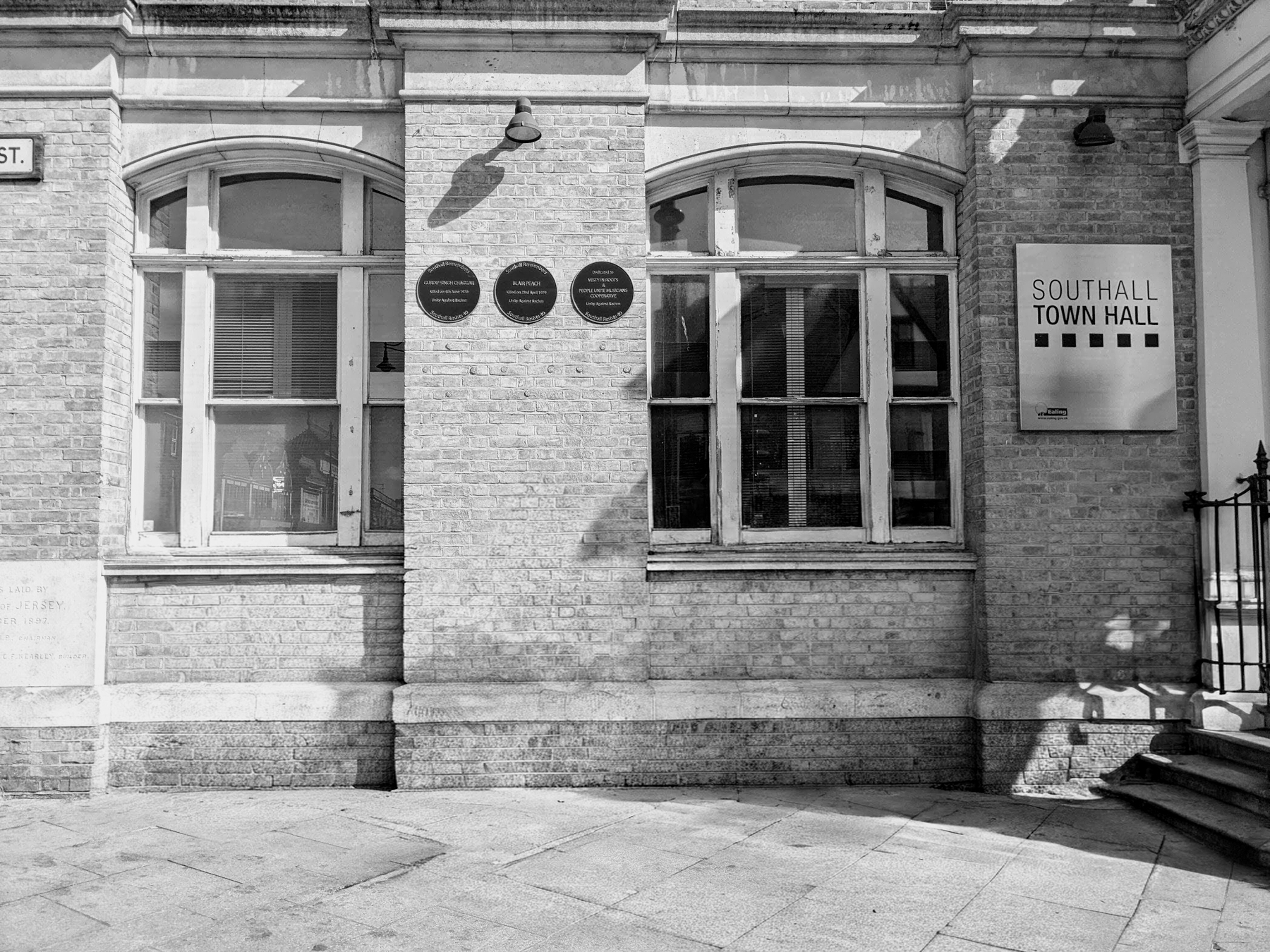
The council’s RISE webpages say it “used and updated the findings of the borough-wide Equality Impact Assessment completed in 2018” when deciding to locate the service at the Town Hall.
Asked for that update, the council replied:
“The Council does not hold recorded information constituting an update to the earlier Equality Analysis Assessment. No separate or discrete updated assessment was created for Southall Town Hall.”
It also holds no record of how the earlier assessment was applied to the Town Hall, and no record of a decision, or reasons, not to carry out a Town Hall-specific assessment. Since the service opened, it has done no site-specific equality, safeguarding or community-impact monitoring:
“The Council does not undertake location-specific monitoring or evaluation of this nature.”
The council says the wording “was intended to refer to the earlier assessment informing subsequent operational consideration; it did not refer to a recorded update”. It is reviewing the wording.
A warning from inside the council
The only pre-opening assessment the council says it holds is an email of 8 January 2025 from a team leader in its Safer Communities team. The officer was writing about a proposed side entrance to the Town Hall for RISE clients.
The officer praised RISE’s existing work in Southall as “invaluable”. But they were “alarmed” that a new alleyway might be created, warning that it “would likely create a further unregulated space that cannot be policed” and “would leave female access user incredibly vulnerable due to the location and limited visibility”.
Referring to the council’s work on male violence against women and girls, they concluded:
“I strongly believe this is not appropriate.”
They added: “I am not sure whether a planning application has been submitted, or whether the location has been surveyed with options considered.”
The council says the email informed the final design of the building. The response does not say what changed as a result.
The council also says officers and RISE spoke with its Community Safety team, the Metropolitan Police, Southall Community Alliance and representatives of the neighbouring Mandir, but that it “does not hold records of most of those discussions”.
“No evidence” — on what basis?
In August, and again in September, the council said:
“There is no evidence that the current issues are being caused by the relocation of RISE. What we are seeing reflects a more complex picture, including displacement from enforcement activity elsewhere and existing pressures in the area.”
Asked what that statement relied on, the council said it was “based on operational intelligence” from the summer’s police and council operation in Southall, which “indicated that the majority of individuals identified as involved in criminal or anti-social behaviour had no identified link to services delivered by RISE”.
It has “not identified a discrete report, dataset or formal causal analysis created for the purpose of making that statement”. It identified no recorded analysis of whether crime or anti-social behaviour changed after the move, and it acknowledged that the ward-level figures it points to “are not a site-specific before-and-after assessment of the Southall Town Hall location”. Nothing in the response addresses “displacement from enforcement activity elsewhere”.
What this does and doesn’t show
None of this shows that RISE caused crime, or that consultation never happened. People who need drug and alcohol treatment deserve a service, and the council’s own officer called the existing one invaluable.
It does show that several assurances given to Southall residents rest on assessments the council cannot produce.
A further response, on what the council’s Community Safety team advised about the move, is due shortly. Southall Stories will publish a fuller investigation once it arrives.
Ealing Council was invited to comment and has said a response will follow.
On 23 October, an Ealing Council spokesperson said:
“We take residents’ concerns about crime and anti-social behaviour in Southall very seriously. We are working closely with the police and other partners to tackle these issues and help prevent them in the longer term.
“Services supporting people with drug and alcohol dependency have been part of Southall for many years and play an important role in helping people into recovery and reducing harm in our communities. Criminal and anti-social behaviour is unacceptable, but it is important not to assume that people accessing treatment are responsible for crime in the area, or that the issues being reported are being caused by RISE.
“The causes of crime and anti-social behaviour are complex, which is why the [process] of gathering evidence is so important, and we will continue to act on residents’ concerns and the information available.
“At the same time, we recognise that some people sleeping rough and others facing complex challenges need support. People access RISE voluntarily to receive help with their drug or alcohol use and improve their health and wellbeing. Our approach combines appropriate enforcement action with compassionate outreach, so that people who need help are supported while those who break the law face the consequences.
“We are increasing CCTV monitoring and on-the-ground patrols, with further targeted police activity planned. We are also stepping up outreach to help people sleeping rough move into accommodation and support. We have listened to residents and businesses and will continue taking action to protect the town centre and ensure Southall remains a place people can be proud of.”
The statement no longer says there is “no evidence” that the problems are caused by RISE, and does not repeat the claim about displacement from enforcement elsewhere. It did not answer my questions about the basis for the 7 August statement, the January 2025 safety warning or the council’s wording on its equality assessment. Those questions will be put again before a fuller article to come.
Sources
- FOI 26-1795 (equality assessment, site impact and safeguarding), with the 8 January 2025 email.
- FOI 26-1807 (“no evidence” statement)
- Ealing Council RISE pages, “Equality assessment for Southall Town Hall” (archived 16 October 2026).
- Council statements: EALING.NEWS, 7 August 2026; North West Londoner, 23 September 2026.