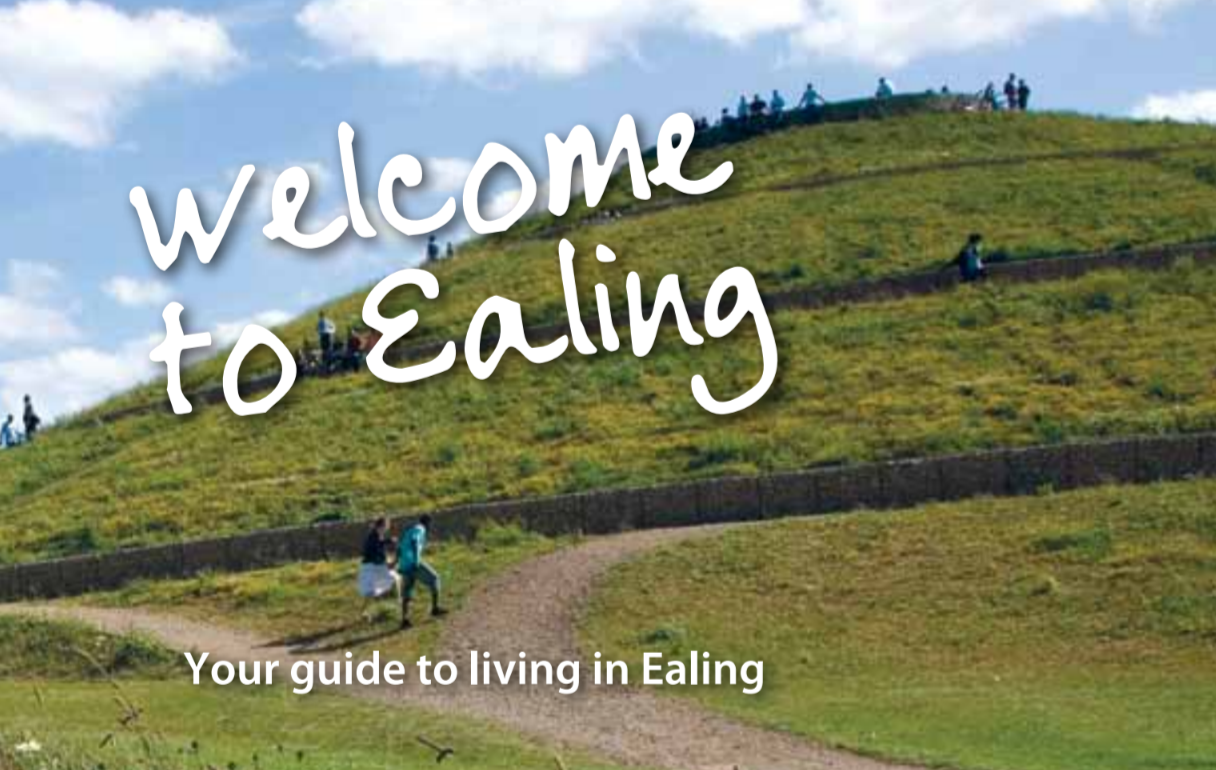
Great Scott. Ealing Council’s welcome guide for new residents was written in 2010. The DeLorean is still parked on their website. And they haven’t changed a word.
If you moved to Ealing recently, you may have been directed to the council’s Welcome Guide for New Residents.
Well, no, you probably weren’t. Unless you’re Ukrainian.
The welcome for the rest of you is sixteen years out of date.
It’s still live on the Ealing Council website, cheerfully promising you “improved services,” a magazine through your letterbox every month, and a (Conservative) council that was “named the UK’s Best Achieving Council in 2009.”
“Roads? Where this guide is going, it doesn’t need roads.”
Sixteen years of austerity, service cuts, consultations, plans, resets, a global pandemic, a cost of living crisis (driven by Russia’s invasion of Ukraine) and four rounds of local elections have come and gone. The guide has not noticed.
We know this not just from the content, but from the Wayback Machine — which, unlike Ealing Council, has actually been paying attention.
The Internet Archive has captured this URL just thirteen times in fourteen years. A flurry of saves in 2011–12, then silence until 2019, then occasional snapshots through to December 2024. There are no captures at all in 2025 or 2026.
Nobody at the council has visited, reviewed, or updated this page in nearly two decades.
It hasn’t been forgotten by the internet — only by the people who published it.
This matters for reasons beyond embarrassment. The document contains active misinformation that could harm the very people it claims to welcome. This is not nostalgia.
This is a council sending new residents back to 2010 without a flux capacitor.
The A&E that closed
The guide tells new residents: “Central Middlesex Hospital also has an Accident and Emergency Department.”
Central Middlesex A&E closed in 2014. It no longer exists. Anyone following that advice in an emergency is being sent to a closed department.
The helpline that was abolished
“You can also contact NHS Direct for health advice 24 hours a day by phoning 0845 4647.”
NHS Direct was abolished in 2013 and replaced by NHS 111. That number has been dead for over a decade. The website — nhsdirect.nhs.uk — no longer exists.
The youth service that was defunded
“Youth and Connexions — provides opportunities for young people aged 13–19.”
Connexions was defunded by the coalition government in 2011–12 — the year this guide was published.
The housing organisation that was dissolved
The inside back cover lists contact numbers and email addresses for Ealing Homes — the arm’s-length organisation that managed council housing. Ealing Homes was wound up in 2011 and housing management returned directly to the council. Both email addresses are dead.
The school building programme that was cancelled
“High schools are set to get even better with more than £300 million being invested under the national Building Schools for the Future programme.”
Building Schools for the Future was cancelled by Michael Gove in July 2010 — six months before this guide was finalised. It was abolished before the ink was dry.
The bins that became fortnightly
The guide promises weekly refuse collection, with missed collections remedied the same day if reported before 5pm. In 2016, Ealing Council switched to fortnightly collections.
As this site has documented in detail, official government data shows that switch coincided with a sustained doubling of fly-tipping in the borough — a fact Ealing Labour’s 2026 election materials have chosen not to mention.
The magazine that changed beyond recognition
> “The council’s residents’ magazine, Around Ealing, is delivered to every home each month.”
Around Ealing still exists — but it is now a quarterly seasonal publication, not a monthly one, and it is primarily a digital product hosted on a third-party platform.
The promise of something landing on your doormat every month is long gone.
The forums that were abolished — and replaced
“Ward Forums, led by the ward councillors, feature joint problem solving on local concerns. Each ward has the chance to influence how an annual budget of £40,000 is spent on local improvements.”
Ward Forums were abolished in 2020.
They have been replaced by Town Forums, which now incorporate the council’s Your Voice Your Town participatory budgeting process — a competitive application system with its own governance arrangements.
[This site is currently investigating those governance arrangements in order to determine any undisclosed conflicts of interest on the panels deciding who gets funded — but that’s another story.]
The Freedom Pass age threshold
“People aged over 60 should apply.”
Freedom Pass eligibility is now tied to the state pension age, which is 66. The guide understates the qualifying age by six years.
Your turn — the community audit
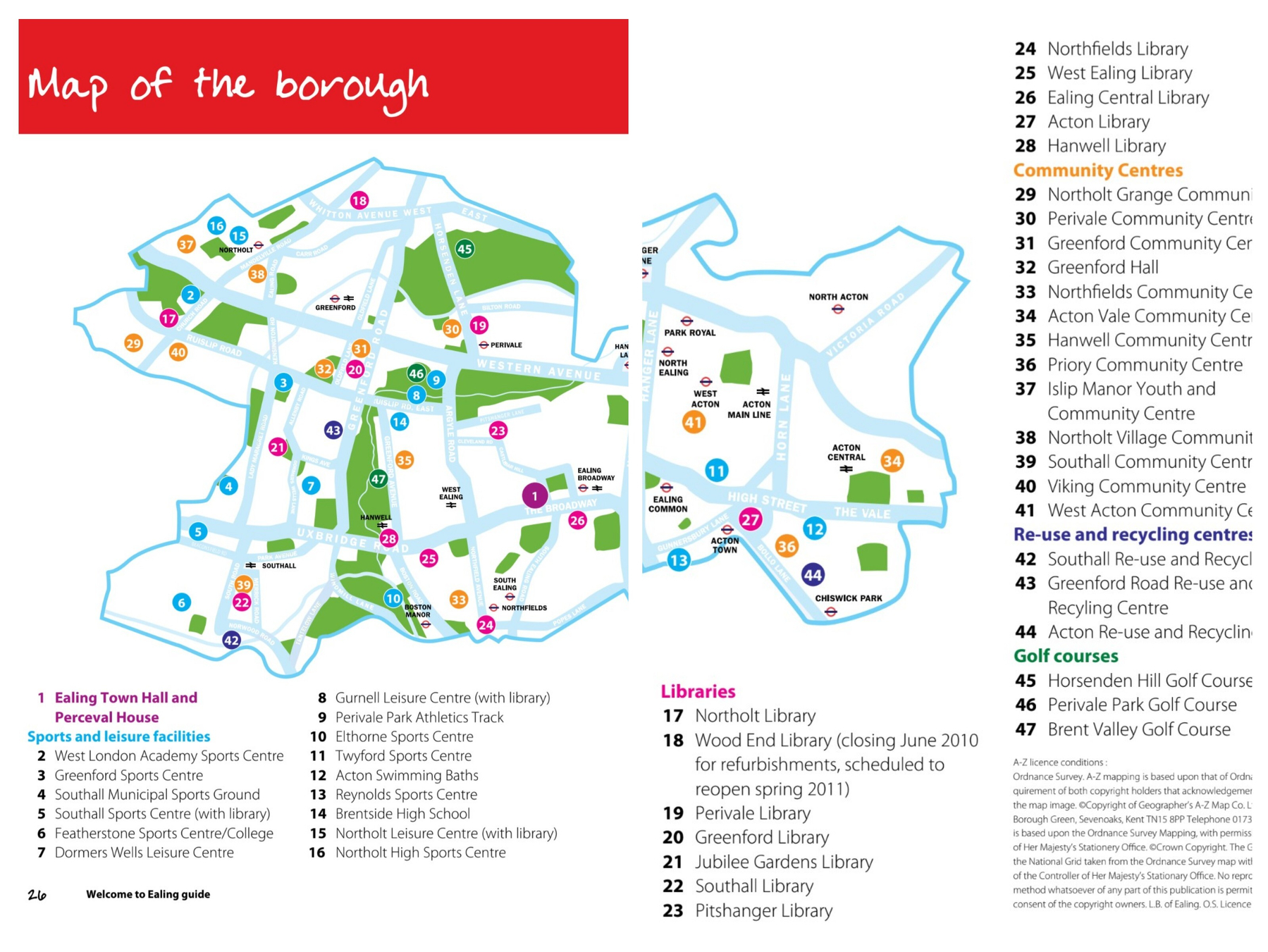
The guide’s back page lists 47 facilities across the borough — sports centres, libraries, community centres, recycling centres, golf courses. That’s before we get to the services described in the text.
The errors above are some of the ones I can verify with confidence. But a document this old, left this untouched, certainly contains others — phone numbers that ring out, email addresses that bounce, facilities quietly reduced, closed or demolished without anyone remembering to update the brochure that recommends them.
So I’ve built a community audit tool — a live, crowdsourced record of what’s still standing and what’s gone. Every entry from the 2010 map is listed. You can mark each one as still open, changed, closed, or sold and redeveloped, and add a note with what you know. All contributions are saved and shared with every visitor.
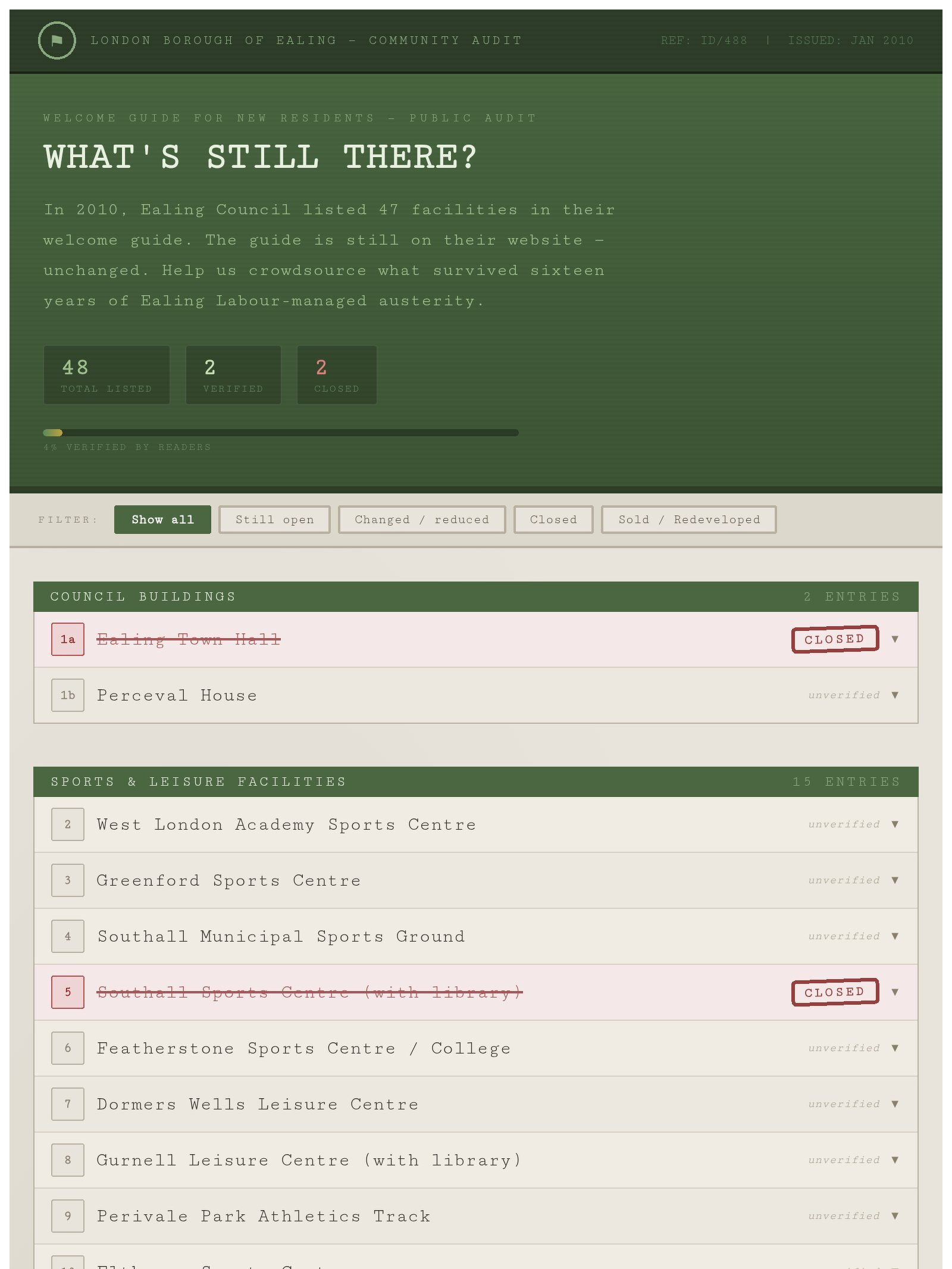
→ View and add your own record at Ealing Audit on Southall Stories
If you’ve lived in the borough, worked in one of these buildings, or watched one of them come down — this is the place to record it.
The most significant findings will be documented in a follow-up piece and, more usefully, in a formal request to the council to either update or withdraw a document that is actively misleading the people it claims to serve.
Because “we ask, we listen, we deliver” was their promise in 2010.
Sixteen years on, the document is still there.
The buildings and services, rather less so.
The Welcome Guide for New Residents has been archived on the Wayback Machine, first captured on 15 January 2012. The live — and unchanged — version remains on the Ealing Council website.