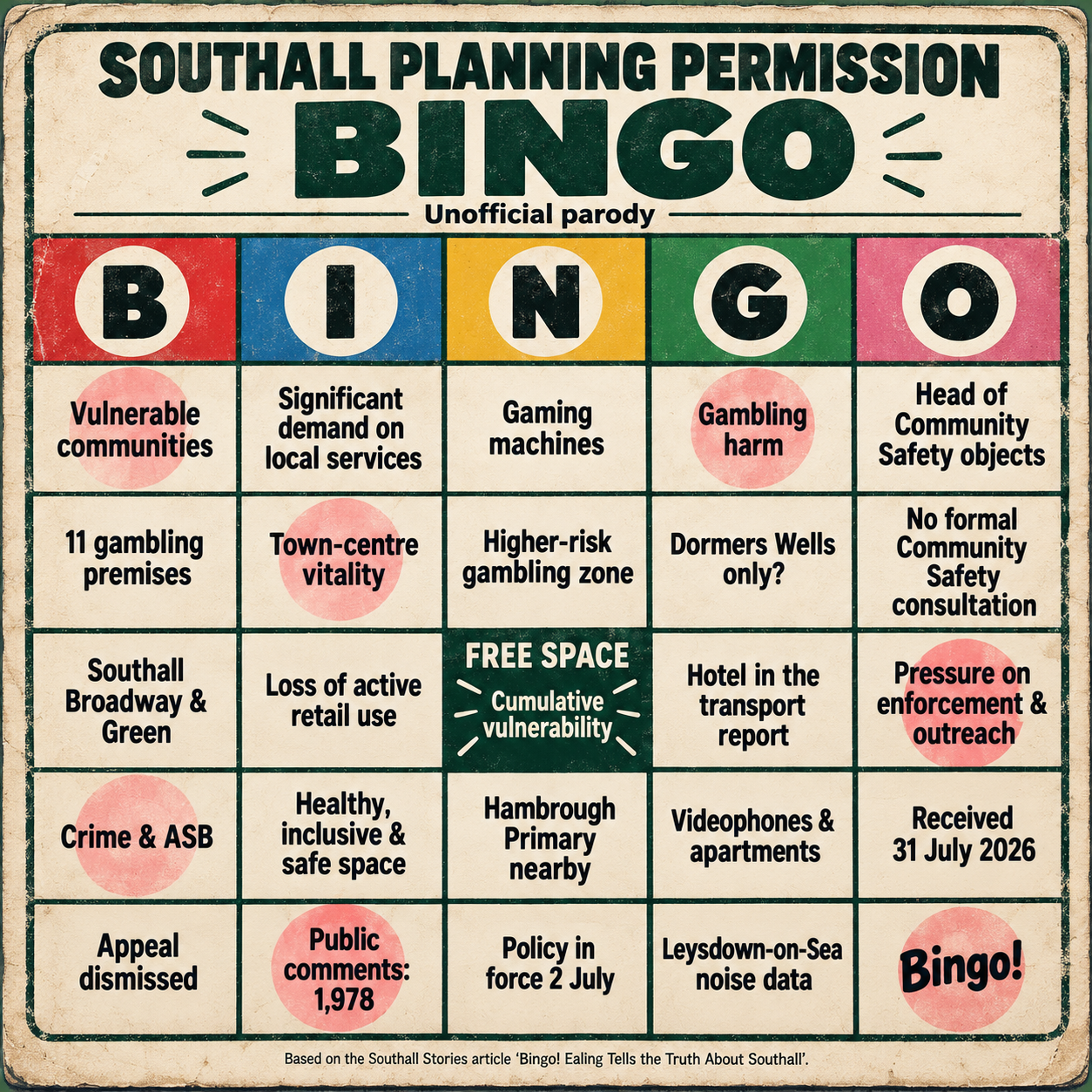
A regular haunt for many years when trekking up to Cleethorpes to visit family was a night out at the bingo.
Not because I was particularly fond of bingo, but because it was a family pastime. It was a social night out. I don’t remember it being a den of iniquity, but times have changed, and not all for the better.
In what feels like another lifetime, I also did a few shifts as a bingo caller in the old people’s home where I worked. While it’s true that my customers were taking a lot of drugs, I’m fairly sure they were prescription only.
Which is all to say it came as something of a surprise to learn how differently a modern “bingo hall” can be viewed.
The name still conjures up callers, dabbers and a social night out. But modern bingo premises can also include significant numbers of gaming machines, which is one reason applications can raise questions about gambling harm, crime and disorder, safeguarding and vulnerability.
But before we get into that, let’s look at how bingo halls come into being in the first place: through the wonderful world of planning.
What are the chances?
What are the chances of a planning application being approved in Ealing?
Plenty of people complain that their own private residential applications for, say, an innocuous kitchen or loft extension are rejected for what seem like spurious or bureaucratic reasons. Meanwhile, profit-seeking developers with planning experts and lawyers can sometimes get approval for schemes that residents find shocking because they know which boxes to tick and which words to use.
Ealing is actually one of the more efficient councils when it comes to processing planning applications within required or agreed timescales. In its own Barriers to Delivery and Action Plan, the council says its Development Management service handles around 5,000 applications a year, makes 100% of major decisions and 98.5% of non-major decisions within the statutory period or an agreed extension, delegates around 95% of schemes to officers and approves around 80% of applications overall.
So it is not simply a rubber-stamping exercise.
Public planning-record analysis from Planning Atlas puts the long-run Ealing approval rate at around 77%, with Southall Broadway at about 70% and Southall Green at about 67%. The Southall Green ward profile records the highest refusal rate in the borough.
What about gambling venues?
Of the gambling-related applications I have so far identified going back around twenty years, fewer than four in ten were approved. In the last ten years, it is fewer than two in ten — one in six. I am still building the underlying dataset, so those figures should be treated as a working count rather than a definitive borough statistic.
But the recent cases are striking enough.
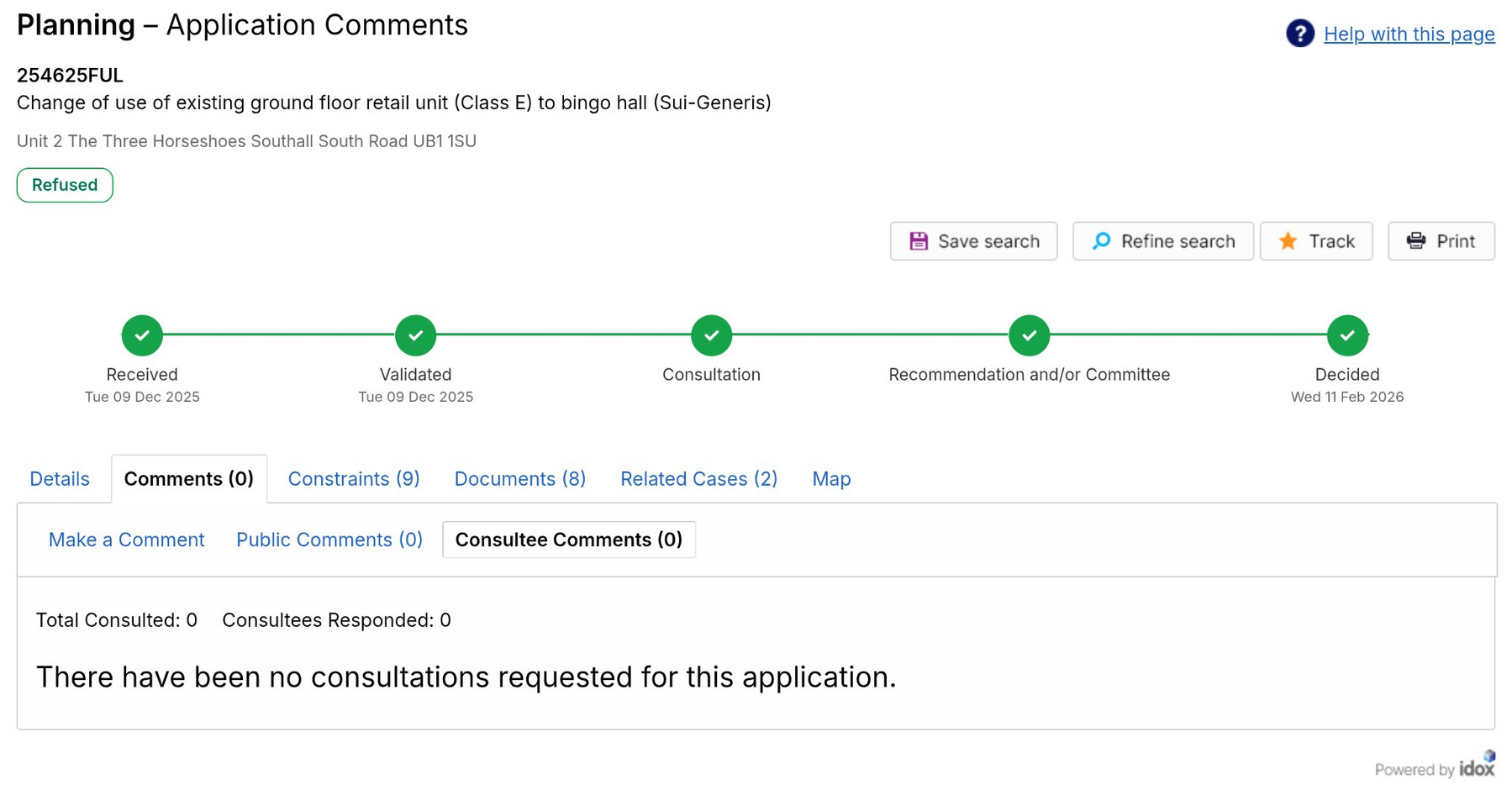
Earlier this year Ealing refused permission to convert Unit 2 at the old Three Horseshoes pub on South Road into a bingo hall. The Three Horseshoes itself was a landmark Southall pub designed by Nowell Parr, later converted into shops and flats. The 2025 application concerned one of those ground-floor retail units.
Ealing refused application 254625FUL in February 2026. The refusal reasons included loss of an active retail use, harm to town-centre vitality, failure to provide healthy, inclusive and safe space, existing anti-social behaviour problems and harmful concentration of gambling-led evening uses.
There were zero public comments on that application.
Its appeal was nevertheless dismissed on 23 July 2026.
Five days later, on 28 July 2026, another bingo appeal was dismissed, this time at 153-155 Uxbridge Road, Hanwell, application 252255FUL. That proposal had generated a quite extraordinary 1,978 public comments.
Then, just three days later, on 31 July 2026, application 262964FUL arrived for another bingo hall — this time at 48 South Road, Southall.
The timing is curious.
It becomes even more curious when you remember that Ealing’s new Gambling Licensing Policy 2026 had come into force only 29 days earlier, on 2 July.
The policy makes clear that some parts of the borough are areas of heightened risk and vulnerability. Applicants are expected to show how their proposals will not exacerbate local risks and to take account of matters including proximity to schools, local crime, safeguarding and existing gambling provision.
If whoever prepared the South Road application had done their homework, they had plenty of homework to do.
If they were playing bingo, they might have been shouting “LINE!” or “HOUSE!” before all their numbers were up.
A remarkably sloppy application
The application documents do not exactly give the impression of a forensic assessment of this particular Southall site.
The transport report refers to a hotel and elsewhere to a banqueting suite and hotel.
There is no hotel.
The security material contains references to videophones and apartments.
The planning statement discusses Dormers Wells High School, more than a mile away, while making no mention of the much closer Hambrough Primary School on South Road.
The noise assessment uses measurements from a bingo hall in Leysdown-on-Sea, Kent, taken on a Tuesday evening in November, as a comparator for a proposed Southall town-centre venue that would operate until midnight seven days a week.
None of these things by itself proves anything about the applicant’s motives.
It may simply be a poorly assembled application. It may be speculative. It may be an attempt to establish the planning principle before spending more money on the later gambling-licence stage.
We don’t know.
What we do know is that someone inside Ealing Council thought the community-safety implications serious enough to intervene.
An unusual intervention
The most interesting objection does not come from one of the residents living near the site.
It comes from Ealing Council’s own Head of Community Safety.
And the manner of the intervention is unusual.
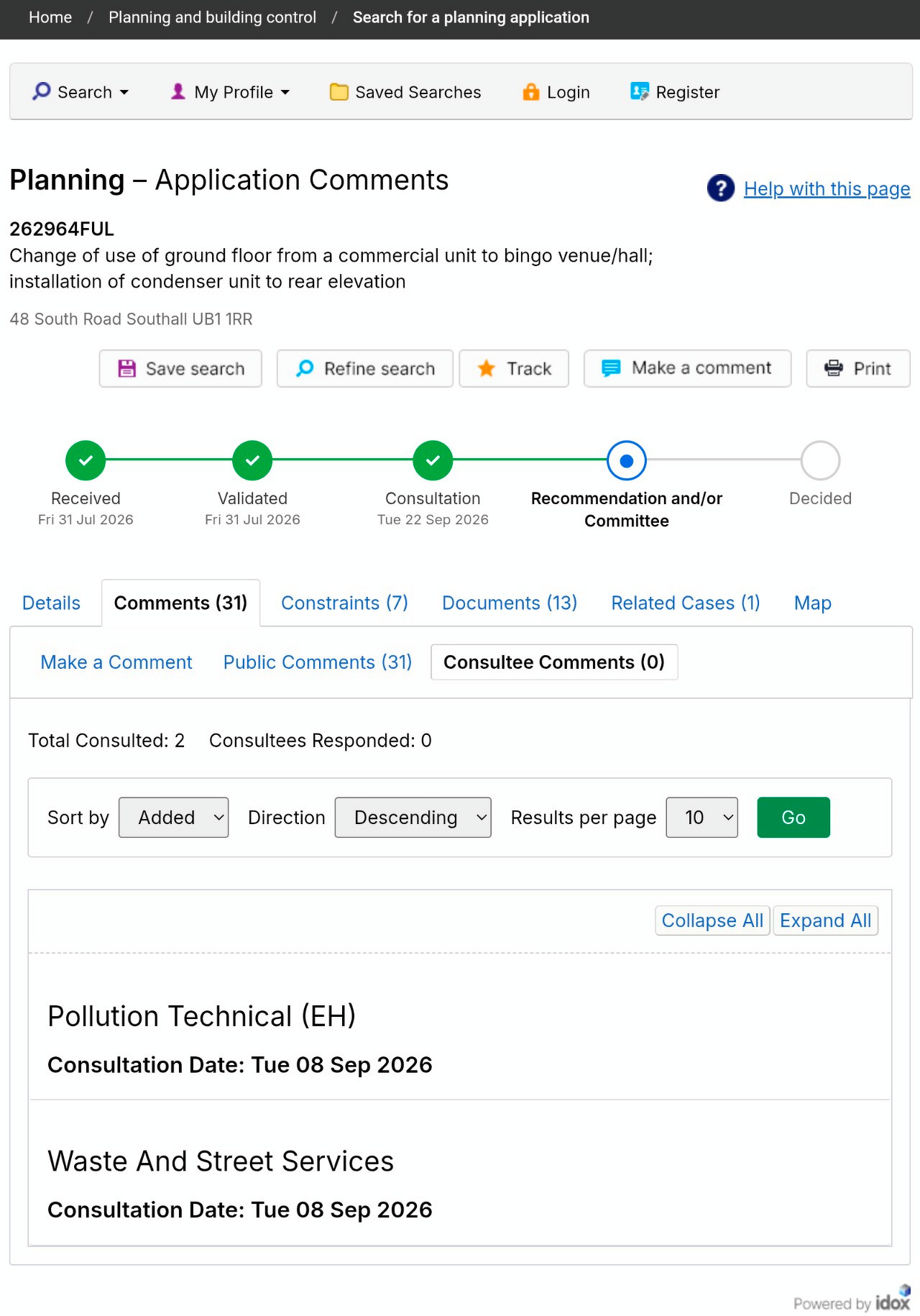
Community Safety does not appear among the formal consultees for the 48 South Road planning application. The planning portal records just two: Pollution Technical (Environmental Health) and Waste and Street Services.
The Head of Community Safety instead lodged a detailed objection through the public comments section, explicitly stating:
“I am submitting this objection in my capacity as Head of Community Safety for Ealing Council.”
That is not simply a resident saying they are worried about a bingo hall.
Nor does it appear to be a routine technical-consultee response generated by the planning system.
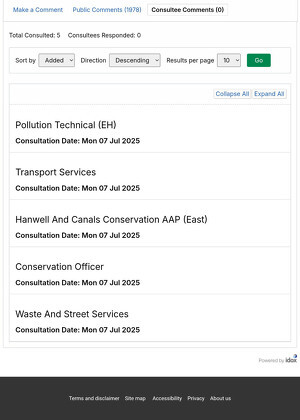
For comparison, the Three Horseshoes bingo application recorded no formal consultees at all. The Hanwell proposal recorded five — Pollution Technical, Transport Services, Hanwell and Canals Conservation AAP (East), the Conservation Officer and Waste and Street Services — but Community Safety was not among them.
The planning portal screenshots tell the story rather neatly.
Hanwell: five formal consultees
Three Horseshoes: no formal consultation
48 South Road: Community Safety intervenes through public comments
Hanwell: nearly 2,000 comments and refusal
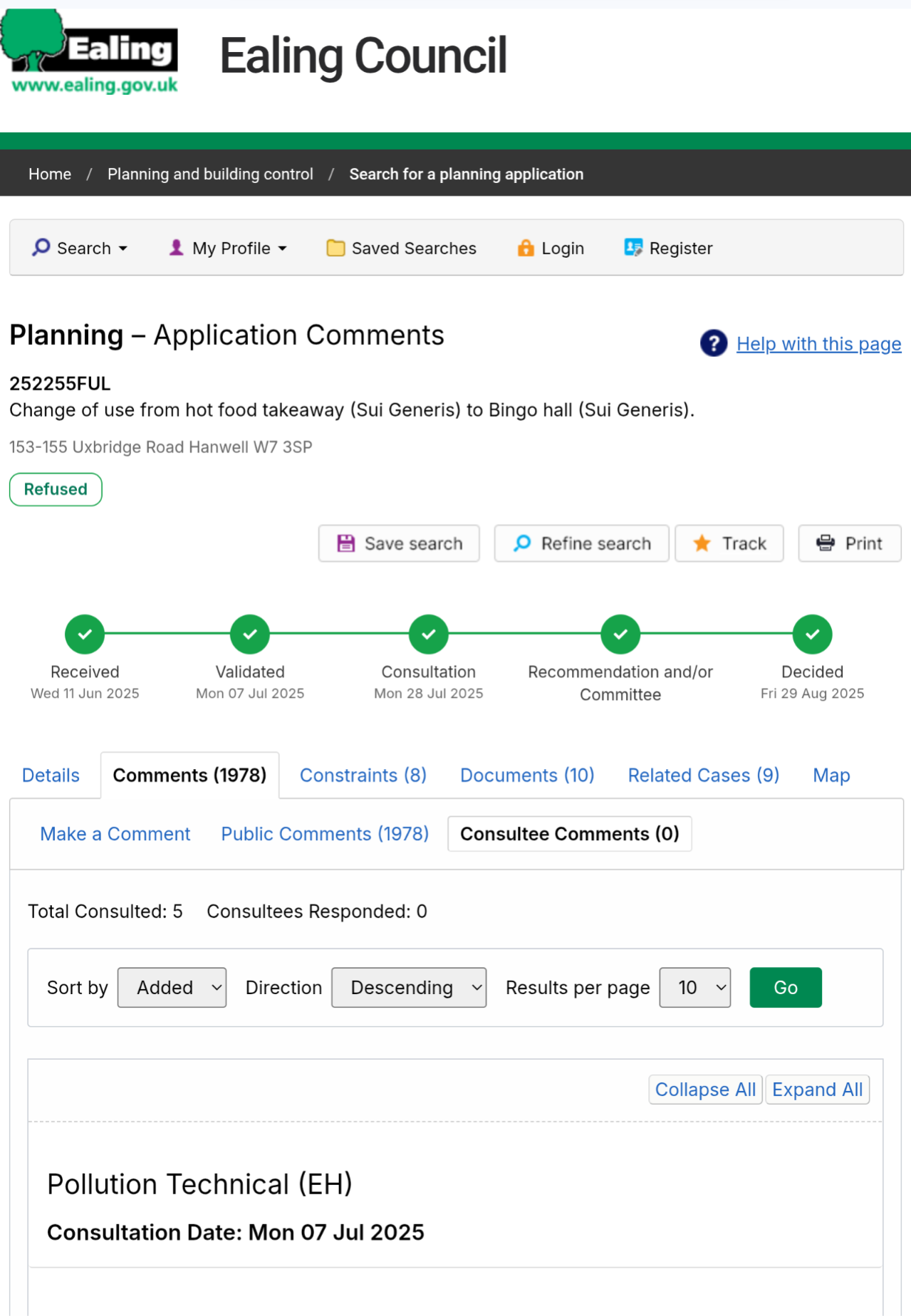
Whatever prompted the intervention at 48 South Road, the Head of Community Safety chose to put a professional assessment of Southall’s vulnerabilities on the public record.
And that is where this stops being a story about bingo.
What Ealing says about Southall
What happens when Ealing Council needs to explain why Southall might be the wrong place for another gambling venue?
It starts describing Southall in much the same way residents have been describing it for years.
The Head of Community Safety describes Southall Town Centre as a place with vulnerable communities and significant existing demands on local services. Another gambling-related use, the objection says, has the potential to increase those pressures, particularly in the evening when town-centre management resources are already stretched.
It could create additional demand for enforcement, community safety, outreach and partnership services.
The objection goes further.
It says vulnerable residents already experience:
“disproportionate levels of harm associated with financial hardship, social isolation, poor mental health, addiction, and exploitation.”
And rather than considering one shop unit in isolation, the Head of Community Safety explicitly urges the council to consider its cumulative impact in the context of existing town-centre pressures and the needs of the local community.
The full objection can be read among the public comments on application 262964FUL.
Where on earth has the Head of Community Safety got all this from?
Residents?
Maybe.
But it is not as though Ealing Council doesn’t already know any of this.
The council has mapped it
Ealing’s new Gambling Local Area Profile maps gambling premises against deprivation, crime, anti-social behaviour, proximity to young people and alcohol- and drug-related incidents.
Southall already has 11 licensed gambling premises.
The profile warns that concentrations of gambling premises can increase exposure and create cumulative risks where other vulnerabilities are present.
Its deprivation analysis highlights significant pockets of high deprivation in Southall.
Then it overlays deprivation with existing gambling provision.
The result?
Southall – particularly Southall Broadway and Southall Green – is explicitly identified as one of Ealing’s “higher-risk” gambling zones.
The profile says crime and anti-social behaviour are concentrated around town centres and that higher crime and ASB are also co-located with gambling premises in Southall.
It identifies Southall town centre as one of the places where young people may regularly pass or encounter gambling premises.
It also shows alcohol- and drug-related ambulance call-outs overlapping with Southall.
Its conclusion is pretty stark: the highest-risk areas tend to be those where gambling availability, socioeconomic vulnerability, youth exposure and alcohol- and drug-related pressures intersect.
In short: Southall.
The council even consulted residents before adopting this framework. The responses are published in full in the Gambling Policy consultation results, including concerns about clustering, deprivation, schools, crime, addiction and the cumulative impact of gambling premises.
And anyone who has followed Southall Stories will recognise the wider context. Earlier this year I wrote about crime, drugs and anti-social behaviour in Southall. The council’s own Local Area Profile now places some of those same pressures inside an official gambling-risk framework.
Cumulative vulnerability
This is the really important part.
The Head of Community Safety says the proposal should not be viewed in isolation.
For years, decisions affecting Southall have tended to be compartmentalised.
Housing developments are considered in isolation from neighbouring housing developments.
Pollution sources are assessed separately from other nearby pollution sources.
New data centres are considered as individual data centres, not together as two or more data centres, and not as another burden in a place already carrying several others.
Residents, meanwhile, live with the cumulative impact.
That is why the Community Safety objection’s emphasis on cumulative vulnerability matters so much.
Once you accept that another gambling venue has to be considered alongside deprivation, crime, disorder, drug- and alcohol-related harm, youth exposure, existing gambling provision and pressure on public services, one rather serious question remains.
Why is cumulative vulnerability so visible here, but so often fragmented into separate assessments elsewhere?
The same people live here when housing schemes are considered.
The same children walk these streets.
The same public services have to cope.
The same residents breathe the same air.
The same town centre absorbs the consequences.
Southall does not become a collection of unrelated planning applications simply because that is how the paperwork is filed.
Ealing may come out of this looking good
And it should be said: Ealing may well come out of this looking good.
If planning permission is refused, the council can point to its new Gambling Licensing Policy and Local Area Profile and say it has put its evidence into practice.
Residents objected.
The Head of Community Safety intervened.
The evidence identified vulnerability and cumulative risk.
The council acted.
If that is what happens, it may be exactly the right decision.
But there is no escaping the wider implication.
In order to explain why another bingo hall might be wrong for Southall, Ealing Council has put on the public record that Southall contains vulnerable communities, stretched local services, socioeconomic deprivation, crime and anti-social behaviour, exposure to addiction and existing concentrations of potentially harmful uses.
The council has mapped those pressures.
It has written them into policy.
And one of its own senior officers has now relied on them in a live planning objection.
That evidence does not disappear when application 262964FUL is decided.
The most interesting thing about this bingo hall may turn out to be that it forced Ealing Council to say publicly what residents have been saying for years:
You cannot understand what is happening to Southall by looking at each incident in isolation.
Bingo!
Sources
- Planning application 262964FUL — 48 South Road, Southall
- Application documents — 262964FUL
- Public comments — 262964FUL
- Ealing Gambling Local Area Profile 2026
- Ealing Gambling Licensing Policy 2026
- Ealing Gambling Policy consultation results
- Ealing Barriers to Delivery and Action Plan
- Planning Atlas — Ealing planning data
- Planning Atlas — Southall Green ward
- Planning Atlas — Three Horseshoes application 254625FUL
- Planning appeals in Ealing — including Three Horseshoes and Hanwell
- The Three Horseshoes, Southall
- Curriculum Vitae: Memento Vivere — David Marsden
- The Drugs Don’t Work — Southall Stories