Shots were fired early in this election campaign.
In late March, Ealing Labour issued a statement attacking the Ealing Community Independents (ECI).
Their candidates, Labour said, include people:
“expelled from the Labour Party, supporters of the far-left Socialist Workers Party, and have connections to the Communist Party of Great Britain.”
ECI, Labour concluded, are:
“hardly independent” and should “tell the truth about who they really represent.”
It is an astounding statement.
Not because the associations it describes are inaccurate — some are accurate — but because of who is making it, and what it reveals about the man at the centre of Ealing Labour’s operation.
A Little History
Peter Mason is the leader of Ealing Council. He has represented Southall Green — home to a majority south Asian Indian-heritage community. And one of the poorest, most deprived wards in Ealing borough — since 2018.
As National Secretary of the Jewish Labour Movement for eight years, Mason led an organisation commited to “socialist Zionism”.
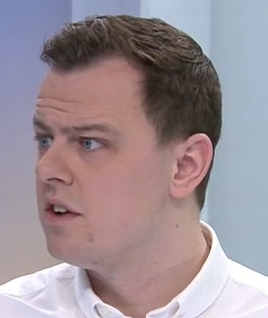
Mason led the campaign to prevent a Corbyn-led Labour government in 2019.
The first Indian Labour MP elected to the House of Commons in 1922, was Shapurji Saklatvala. Saklatvala was a staunch Communist and a member of the Communist Party of Great Britain (CPGB). The CPGB(ML)’s headquarters is Saklatvala Hall in Peter Mason’s council ward in Southall Green.
This was the venue — granted free and in solidarity — for the launch of the resident-led report “What Happened to Southall?”, which documents Mason’s record, and is recommended by the London Forum to its members for its “depth of analysis and implications”.
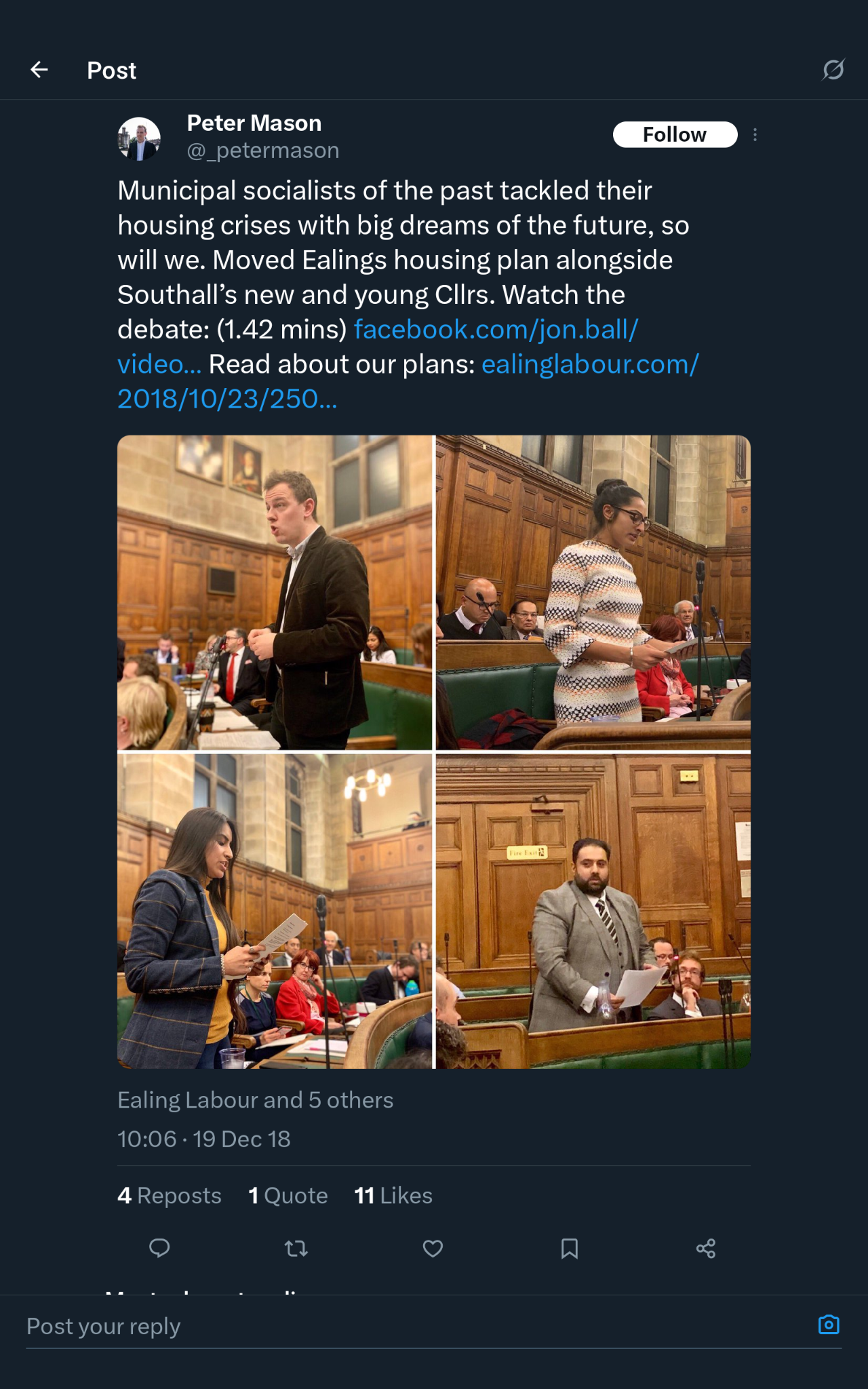
Mason self-identifies as a left-winger and a municipal socialist. He has spoken at the unveiling of replacement plaques commemorating Blair Peach and Gurdip Singh Chaggar, killed in racist attacks on the streets of Southall, where he named structural racism as the cause of Southall’s gaps in life expectancy, earnings and housing, criticised the borough’s role as a dormitory town for wealthier commuters, and committed Ealing Council to reindustrialisation, high-quality local jobs, and the dismantling of inequality.
Mason used SWP membership and “communist links” as a smear against candidates including those standing in his own ward (and which are entirely inaccurate in that ward).
That is where this story begins. It does not end there.
The Purge
The pattern did not begin with this election.
In April 2021, more than fifty Ealing Labour members and activists signed an open letter urging left-leaning councillors not to vote for Mason as Labour group leader, describing him as “a real and present danger to the future of the left in the Labour Party” and documenting his role in national-level disciplinary processes that had seen left-wing members suspended and expelled. Mason became leader anyway.
Lewis Cox, then Labour councillor for Hobbayne, resigned immediately rather than serve under what he called Mason’s “toxic brand of politics.” His resignation letter described a system “based on patronage, back-room deals and cronyism.”
What followed was a pattern of deselection extending well beyond the ideological left.
Swaran Singh Padda — sixteen-year Labour councillor for Lady Margaret — was told by Mason in July 2025 he would not be selected anywhere, then suspended in October 2025 after being photographed at a public meeting attended by Jeremy Corbyn. He is now standing as an independent in Mason’s own ward. “I only want Mason’s votes,” he told me.
Kate Crawford, Labour councillor in East Acton for 28 years, was told in early 2026 she could not stand again. She joined the Liberal Democrats, calling Mason “a very controlling leader” and adding, “I know where the bodies are buried.”
John Martin, Labour councillor for Norwood Green, resigned and is standing as an independent in his own ward, citing principles that “cannot and should not be compromised.”
When Ealing Labour says ECI candidates are “hardly independent” because some were expelled, they do not mention that it was Mason himself who was instrumental in those expulsions. The people he expelled did not choose to leave. He removed them.
The Network
Asa Winstanley’s book Weaponising Anti-Semitism (OR Books, 2023) documents Mason’s broader institutional trajectory in detail.
Yesterday, Jody McIntyre brought the story to a wider audience, and today posted the details.
Mason’s political formation did not begin with Ealing. It began in student politics — specifically with the Union of Jewish Students, where he served as Campaigns Officer from August 2008 to April 2009. He has said on video, (around the 3:30 mark in the full version) that he was recruited into student politics by his predecessor in that role, describing that person as one of his closest friends, now living in Israel.
Mason’s predecessor as UJS Campaigns Officer was Yair Zivan, confirmed in that role by the Guardian in May 2008 — three months before Mason took over.
LinkedIn records confirm that Zivan served as UJS Campaign Director from June 2007 to July 2009, overlapping with Mason’s nine months as Campaigns Officer from August 2008 to April 2009.
Both men grew up in Leicester.
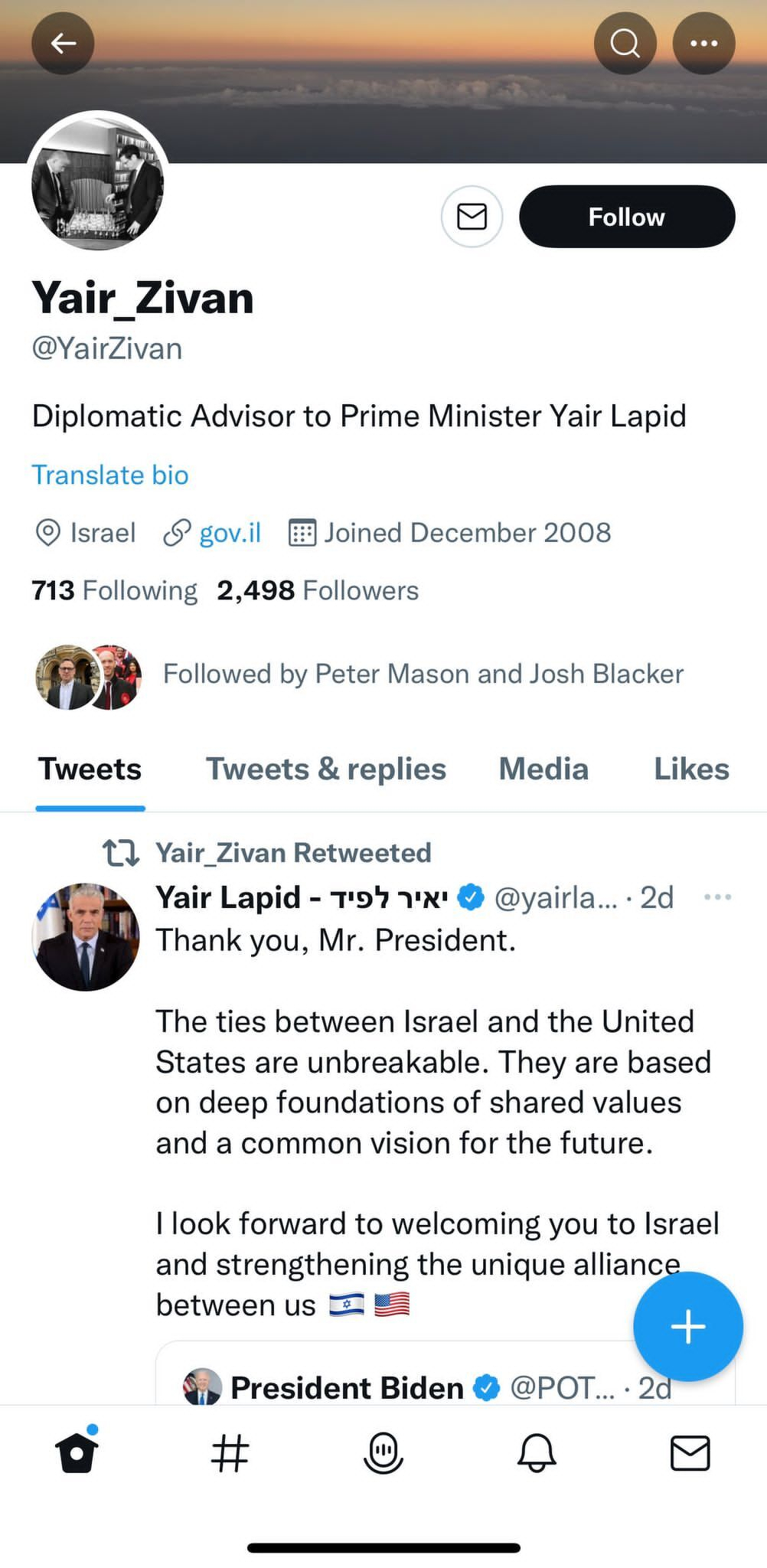
(It’s likely that Mason’s former Ealing Labour colleague Josh Blacker knew Zivan separately from their shared time at University College London.)
Zivan subsequently spent 18 months as an IDF Press Officer before becoming Foreign Affairs Adviser and International Media Spokesperson to former Israeli Prime Minister Yair Lapid, where his Jewish News profile describes him as “the standard-bearer for a new generation of Israeli political advisers.” Mason follows Zivan on Twitter.
The man Mason describes as one of his closest friends — the person who recruited him into political life — is now a senior diplomatic adviser to the Israeli state, and was for years one of the most senior international communications operatives for an Israeli prime minister.
Winstanley documents that Mason’s path to JLM National Secretary ran through Progress, the JLC’s London Jewish Forum, an advisory role to the Labour group at the London Assembly, and a stint as office manager for Liz Kendall MP. From JLM Secretary (2013–2021), Mason moved to Labour’s National Constitutional Committee including as Vice Chair (2016–2024), then to the National Executive Committee in September 2024 on the ‘Labour to Win’ slate, and now sits as Deputy Leader of the LGA Labour Group, Deputy Chair of the Local Government Association, and on the executive of London Labour.
In January 2026, Mason was named by the Telegraph as one of the eight NEC officers who personally voted to block Andy Burnham from standing in the Gorton and Denton by-election — a decision that, the paper noted, “very possibly” determined “the future of this country’s leadership.” The piece singled Mason out by name alongside Starmer himself, describing the NEC under Starmer and McSweeney as a machine that “ruthlessly stamps out dissent.” Mason is not peripheral to this operation. He is a driving force.
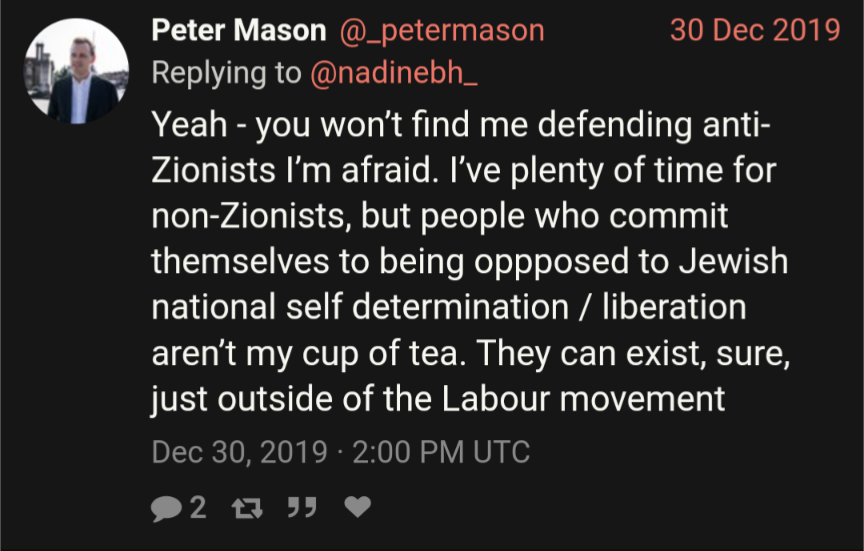
In a public statement made in 2019, Mason declared that anti-Zionists have no place in the Labour movement — a position held by a councillor representing a ward where large Sikh, Muslim and Arab communities hold anti-Zionist views as a matter of political conviction.
Hilary Wise, expelled from Labour during the period when Mason was operating through the NCC, described him in December 2025 as:
“the main Rottweiler for me and other people in West London” on Palestine-related issues.
She described him as:
“a passionate Zionist” and “indifferent to Israel’s decades of violations of international law.”
Mason has every right to hold those political commitments. Southall voters have every right to know about them.
The Municipal Socialist
In December 2018, Mason tweeted from a council chamber debate on Ealing’s housing plan:
“Municipal socialists of the past tackled their housing crises with big dreams of the future, so will we.”
The link to that housing plan — on ealinglabour.com — now redirects to an Indonesian pornography and gambling website. The dreams, it turns out, have a similar trajectory. (Even the Internet Archive doesn’t have a copy.)
Around the same time, Mason told The Atlantic:
“I consider myself to be left-wing. There’s not much in the manifesto I disagree with. But because I talk about anti-Semitism and I’m Jewish, I’m pigeonholed as being more right-wing than Genghis Khan.”
What the record actually shows is this.
In 2018, Ealing was awarded approximately £100 million by the Greater London Authority to deliver 1,138 genuinely affordable homes. By early 2026, just 180 had been completed. 16% of the target. £71.9 million spent.
The waiting list rose from 9,000 to over 12,000 under Mason’s watch. In September 2023, the council removed all Band D applicants from the register. The list dropped to 7,500. Families were not rehoused — they were simply no longer counted. The council cited the fall as evidence of progress.
Ealing demolished more social homes than any other London borough in the decade to 2023. The Community Infrastructure Levy — promised in Mason’s 2022 manifesto to raise £12 million per year — was not adopted until December 2025. The council approved the expansion of the Southall Gasworks development from 3,750 to 8,100 homes just months before the levy came into force. And between 2019 and 2024, Southall generated £13.1 million in Section 106 contributions; £4.9 million was spent locally.
Mason attended MIPIM — the world’s largest property developer conference, held in Cannes — with travel and costs funded by a consortium that included Berkeley Group and others with active planning interests in Ealing. He later apologised, calling it “a mistake.” The apology did not address what a decade of developer-hosted relationship-building had done to the framing of housing strategy, and the impact on private sector rents (a story in itself, and will be published post-election).
In October 2022, Mason himself told the Southall Community Alliance:
“If you live in Southall, your opportunity and your access to get onto the housing ladder is next to nothing. 80% of the homes in Southall Green are in the private rented sector.”
He was describing the outcomes of a strategy he had shaped as cabinet member for Housing, Planning and Transformation. He holds an MSc in Urban Regeneration from the Bartlett. He had both the expertise and the executive responsibility.
The municipal socialists of the past built homes. Under Mason’s stewardship, 84% of the target went unbuilt.
The Democratic Decline
Municipal socialism is not only about building homes. It is about accountability — about the structures through which communities hold power to account.
In July 2025, while the Save Ealing Children’s Centres campaign petitioned outside Perceval House, Mason’s administration voted to more than double the threshold for a petition to trigger a full council debate — from 1,500 signatures to 3,671. Every Labour councillor voted in favour. Every Conservative and Liberal Democrat councillor voted against. The same meeting banned hybrid paper-and-online petitions.
For comparison: Westminster requires 100 signatures. Barnet requires 25. Brent requires 5. Hillingdon has no threshold at all.
The petition demanding Ealing debate divesting its pension fund from companies linked to the conflict in Gaza gathered thousands of signatures. Under Ealing’s rules, it was insufficient. The Pension Fund Panel has never placed divestment on its agenda. Mason sat on the board of London CIV — the body managing those investments — from December 2021 until July 2024, leaving the seat vacant when he departed. Three months later, the LGA — on whose board Mason now sits as a Director — commissioned a legal opinion from Nigel Giffin KC concluding that local authorities were under no public law obligation to divest. That opinion is now the primary institutional argument cited by councils resisting divestment calls across England and Wales.
Ward forums — the mechanism through which residents could directly question councillors on the record — have been replaced under Mason’s leadership with the council-controlled “Your Town, Your Voice” programme.
The ten children’s centres proposed for closure or repurposing in 2024 included three of the six in Southall — the borough’s most deprived area. The projected saving: approximately £750,000. In the five years of Mason’s leadership, the council spent over £1 million on increased councillor allowances. Mason’s own leadership allowance rose by 70% to £58,000, justified on the grounds of attracting “higher calibre candidates” — in communities where 35% of children grow up in poverty after housing costs. Mason leader’s allowance today is almost double what it was five years ago.
Southall Has Been Here Before
Ealing Labour’s attack on ECI cited SWP connections as disqualifying. It is worth being precise about what the SWP was doing in Southall.
On 23 April 1979 — St George’s Day — the National Front held an election meeting at Southall Town Hall, in the heart of a community they wanted removed from Britain. The community organised against it. Workers struck. Ten thousand residents signed a petition. Thousands marched.
Blair Peach was 33 years old, a teacher of children with special needs, and a member of the Socialist Workers Party. He travelled to Southall to stand with the community against the NF meeting. By the end of the night, 345 people had been arrested. Blair Peach was struck on the head by a member of the Metropolitan Police’s Special Patrol Group. He died the following day. No police officer was ever charged. The internal police inquiry, suppressed for thirty years, concluded he had almost certainly been killed by one of six SPG officers who had preserved their silence.
Eight thousand people filed past Blair Peach’s body. Between five and ten thousand followed his coffin. A primary school in Southall bears his name. Blair Peach was killed in what is now Southall Broadway ward.
Peter Mason stood at the unveiling of replacement memorial plaques for Blair Peach and Gurdip Singh Chaggar and committed Ealing Labour to fighting “inequality and structural racism.”
He then used SWP membership as a smear against candidates standing against him in Southall Green.
The people who stood with Southall in 1979 were not asking about party cards. The community did not ask Blair Peach which organisation he belonged to before it filed past his body. It honoured him because he came, and because he died here, standing against fascism.
Mason knows this history. He invokes it when it suits him.
What the National Labour Government Is Doing
Ealing Labour’s attack on ECI for alleged far-left connections sits alongside something that deserves equal scrutiny: what the national Labour government whose NEC Mason sits on is actually doing.
It has doubled the qualifying period for permanent settlement from five to ten years. Home Secretary Shabana Mahmood has told migrants they must “earn the right to be in the UK.” This Labour government has stripped newly recognised refugees of permanent status, replacing it with temporary protection renewable every 30 months. It is reviewing how UK courts apply the European Court of Human Rights provisions that protect people from deportation to dangerous situations.
The Institute for Government is unambiguous: there is now “a race to toughen immigration controls among parties that lead the election polls.”
Mason said this election should not be a choice between “extreme-Left and extreme-Right.” He is right that the Conservative candidate’s remarks about deportation represent something extreme. The difference between what she said and what his government is doing is a matter of volume, not direction.
Southall residents are not obliged to choose between a party that says fascism loudly and a party that does it quietly.
Conclusion: The Oldest Question
Ealing Labour asks ECI to be honest about who they represent. It is the right question. Let us apply it consistently.
Peter Mason was born Peter Robert Ness. He is now Labour’s NEC member, Deputy Leader of the LGA Labour Group, and Deputy Chair of the Local Government Association — a man whose primary political orientation has been national rather than local, whose career has been built through party machinery, internal disciplinary processes, and national bodies rather than through the granular work of improving conditions in Southall.
He is a professionally qualified town planner who presided over a 16% affordable homes delivery rate.
He was a board member of the investment vehicle managing Ealing’s pension assets during the period in which divestment was never placed on the agenda.
He attended developer-funded conferences in Cannes while Berkeley Group was remediating the contaminated Gasworks site adjacent to Blair Peach Primary School.
He launched a programme called the Southall Reset — the fourth major regeneration framework in fifteen years — while planning to close three of Southall’s six children’s centres.
He invokes Blair Peach’s memory while using the political affiliations of Peach’s own organisation as a campaign smear.
Mason’s political choices — consistently applied over more than a decade, consistently at odds with the interests of the communities Mason represents, and consistently insulated from the democratic accountability that might have changed them.
On your side?
The full evidential record — drawn from FOI responses, council documents, planning records, and published investigative journalism — is archived at southallstories.uk and documented in depth by Community Powered Reporting.
Read both before you vote.
Today, on 7 May, voters in Southall Green get to decide who Peter Mason really represents.